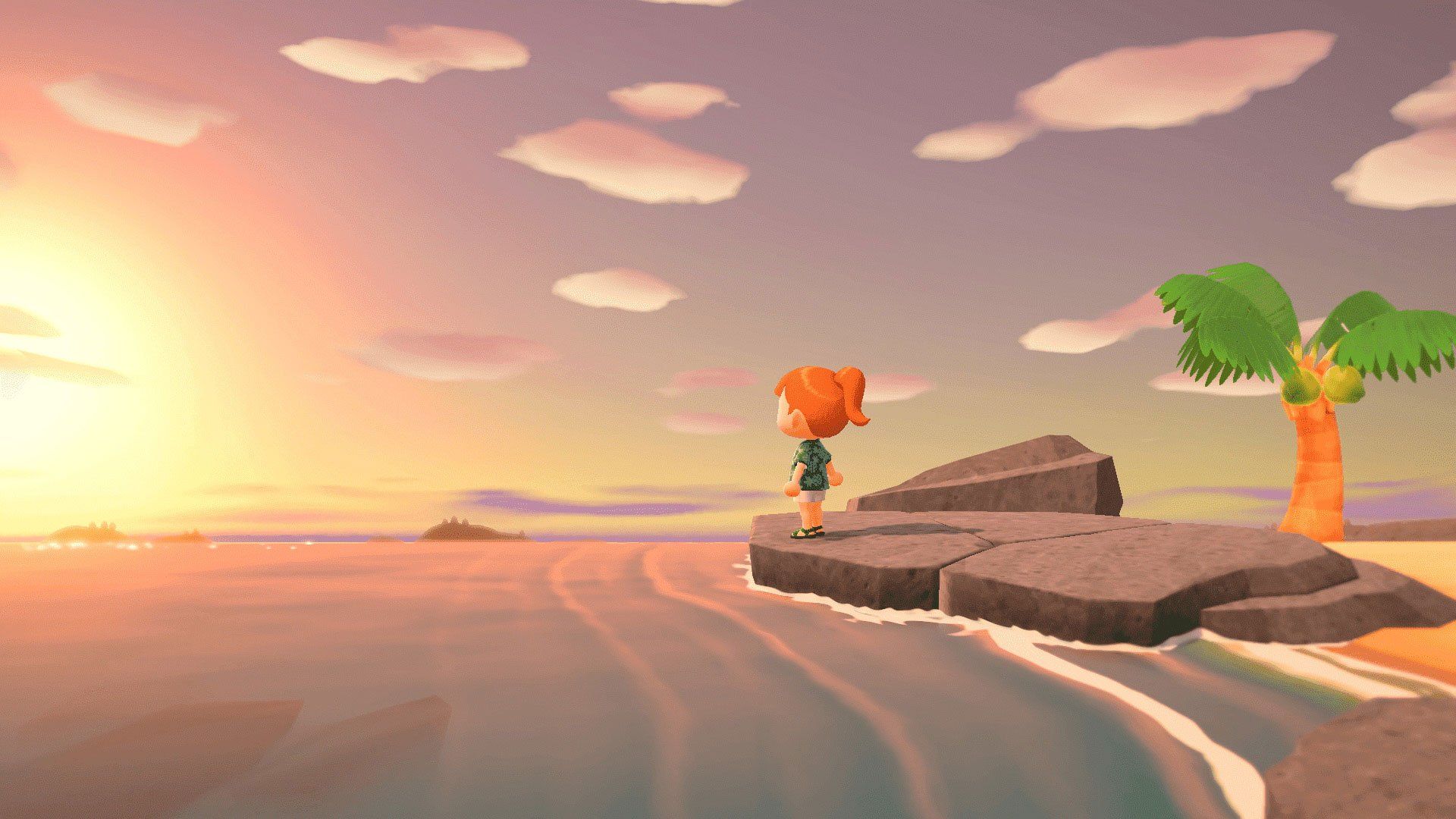
 Picture credit: Nintendo
“Maybe it's about time for you to wake up to your new life… an island paradise with your best pals sounds pretty groovy to me.” – K.K. Slider
In the summer of 2016, the world was a very different place. Armed with phones (not masks) and throwing caution to the wind, millions of players worldwide rushed out into the streets, searching not for toilet paper, not hand sanitizer, but for virtual Pokémon creatures. That mystical “Pokémon Go Summer” was a surreal time, when the lines dividing society seemed thin – strangers greeted each other with intel on Pokémon hideouts; once-reclusive gamers stepped out into the sunlight; and kids, teenagers, and grandparents all worked together to defeat powerful foes. It was rare to open the front door without seeing packs of players under the game’s spell. It was a tumultuous time for history (as it always is), but for one fleeting moment, the world seemed a vast, promising place. All anyone had to do to begin their adventure was to go out into it.
Fast-forward to 2020. The coronavirus pandemic has infected and taken the lives of millions; millions more are locked inside their homes. The headlines are unsettling at best, and dystopian at worst: “JOB LOSSES SOUR; US VIRUS CASES TOP WORLD,” proclaims the front page of the New York Times; “We Are Living in a Failed State,” argues The Atlantic. Since social distancing and the quarantine began, the world has never seemed a scarier place – even the act of going outside for groceries is carefully strategized and kept as brief as possible to avoid infection. We’re not looking for adventures, anymore – we’re trying to escape. And in this loud, unrelenting world, another video game has arrived like a lullaby: Animal Crossing: New Horizons.
Animal Crossing – a “life simulator” where the player is tasked with turning a deserted island into a bustling community – was met with universal acclaim when it launched on March 20, selling a record-breaking five million copies to become the best-selling Nintendo Switch game of all time. On social media came a deluge of Animal Crossing posts: my Twitter feed’s endless stream of election-themed despair transformed into a pastel animal show-and-tell, and all of my group chats were lighting up with invitations to their Animal Crossing islands. Thousands of curious gamers who had never played the game before were purchasing Switches just for the game, leading to a worldwide shortage of the console. “I feel like I’m part of a global gaming phenomenon right now,” wrote Eric Kim in an email conversation.
But there are plenty of other hobbies to indulge in during quarantine – bread-baking, book reading, wellness routines, Tik Tok dances – so where had this game come from? What pushed this niche game about colorful animals into the national spotlight?
•
The first Animal Crossing game I played was New Leaf, two years before the explosion of New Horizons. In the first ten minutes of the game, I met Isabelle, a charming, golden-colored anthropomorphic Shih Tzu, who led me to a deserted, snowy patch of land, and crowned me the new mayor of the town. Then I met Tom Nook, a stout, sleepy-faced raccoon, who told me I owed him 19,800 Bells for a house loan. (There’s debt in this game? I thought incredulously.) I walked around a bit, and chatted with other pastel-colored animals — they all just told me how happy they were that I was there. I rolled up a few snowballs. I picked a few fruits. And I had no idea what to do next.
Bored out of my mind, I got out my phone and messaged Sylvia Yu, a longtime Animal Crossing aficionado who knew more about these pastel animals than anyone I knew.
[11:07 PM] Sunny: “sylvia. Finally playing animal crossing!”
“I have eleven pears but what do I do now”
“now im just running around LOL”
I spent the next few minutes walking around aimlessly. As a calming guitar plucked in the background, a light flurry drifted slowly down the screen, and my eyes began to droop. Can a video game put you to sleep? I thought. I stared out of the window, and idly noticed it was snowing outside my own window as well, white flakes bright against the night sky.
My phone buzzed:
[11:23 PM] Sylvia: “welcome abroad the animal crossing train :^)”
[11:23 PM] Sunny: “but what do i …… do”
[11:24 PM] Sylvia: “well… I guess you can’t really do anything now, huh?”
“all the stores are closed, so you can’t buy any furniture”
“and most of your villagers must be asleep by now?”
“but you can shake trees and sell the fruits! catch fish! dig up fossils!”
But I couldn’t figure out why I would do any of those things. I could eat the fruit, but it didn’t do anything to my character. The fish and the fossils just sat in my inventory, taking up space among my eleven useless pears. Isabelle the dog and Tom Nook the raccoon were nowhere to be seen. And the village was deserted and silent, save for the slow guitar melody playing away…
Eventually a villager – Apple, a pudgy hamster – walked up to me in the dead of night, and asked me for one of my pears. This hamster’s name is Apple? You’re kidding me, I thought. But happy to oblige, I selected one of my eleven pears from my inventory, and handed it to Apple the hamster. “Well, let me make it up to you!” she exclaimed. She reached into her pockets and gave me a refrigerator.
I don’t get it, I thought. I don’t understand this at all. Frustrated, I shut the game off. For years, I never looked back.
•
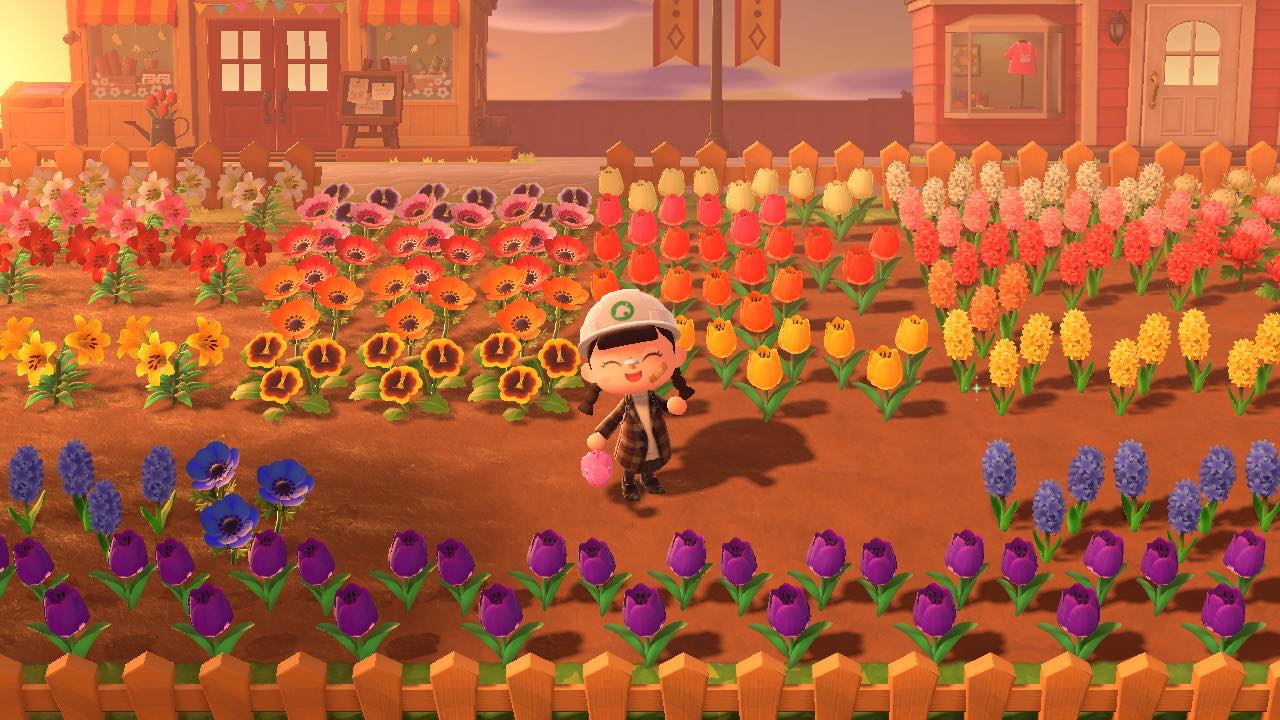 Picture credit: Sylvia Yu
Animal Crossing: New Horizons is a game where you live on an island with animals and can enjoy village life. Little by little, you can grow a small island settlement into a bustling community for you and your anthropomorphic animal villagers, and talk to them to slowly build up friendships. In the beginning, you can go fishing, catch bugs with a net, and pick fruit. And… that’s pretty much it. There is no global leaderboard, no zombie vampires to fight, and no points to score. This game has something even better: you can go outside.
Animal Crossing is a game about patience – you can’t just push your way through to “beat” the game. The game’s calendar moves in step with real-life; that is, if you’re playing at 9 A.M., your villagers will be waking up for a morning walk, and if you open it up right before bed, you’ll find that all the shops have already closed for the evening. An adorable boar named Daisy Mae comes to sell you turnips every Sunday, and your orchard will bear fruit every three days. Snow covers the trees in the winter months, cherry blossoms bloom in the springtime, and fireflies illuminate humid summer nights. Every day is something new – a wedding ceremony, a villager’s birthday, or a traveling market – providing the idyllic rhythm of daily life while the real world is frozen, sheltered-in-place. “There’s nothing like playing games about real life instead of living… real life,” Sylvia tells me. If there were ever a time to fantasize about a life of going outside, talking to friends, and successfully paying rent, this would be it.
But most importantly, with all there is to do in Animal Crossing, you don’t have to do anything. The sense of urgency present in so many other video games (“Race to the finish line!” says Mario Kart), and in real life (“This work is due tomorrow!” says our schools and workplaces) is conspicuously absent in Animal Crossing. You could arrange your village into neatly divided streets and neighborhoods, but you can just as easily leave it as a rural scattering of trees and campsites. Want to bet money on the game’s turnip “stalk” market, or do you want to while away the day gossiping with villagers? You can do that too. You can even leave your rent unpaid – Tom Nook won’t even mind. But you would do well to pluck up the weeds that grow around the island, and check in on your villagers whenever you can – they love talking.
The world of Animal Crossing is a vivid and colorful one, where furniture falls from trees, gift-wrapped presents fall from the sky, and cheerful candy-colored animals invite you into their houses to play. “The game is like this alternate reality that you can step in for a little bit,” Christina Pan explains. “It’s like therapy to me.”
•
I spoke with a variety of players, both newcomers and longtime players, to see how they were playing the game (and partially because I was jealous I couldn’t try the new version for myself). If there’s one thing every Animal Crossing player has in common, it’s that everyone has something they want to show off on their island.
Through the tiny panels of a Zoom call, I toured island after island. Miriam Franks and I celebrated Clyde the horse’s birthday on her island, and we had her blue-haired avatar give him a stand mixer as a gift. “It’s like having little friends, you know?” she said. “Even though I know they’re not real, and I don’t think Clyde is that cute, it’s… important, you know?” I reveled in the absurdity of giving a horse a stand mixer, and how much care she had put into the act.
The animals also celebrate your birthday; Bread Lee showed me a delicious strawberry cake in their room, brought over from villagers during a surprise party. It stood out against Bread’s eclectic collection of gifts — among them a punching bag and a skeleton — from other villagers and real-life players.
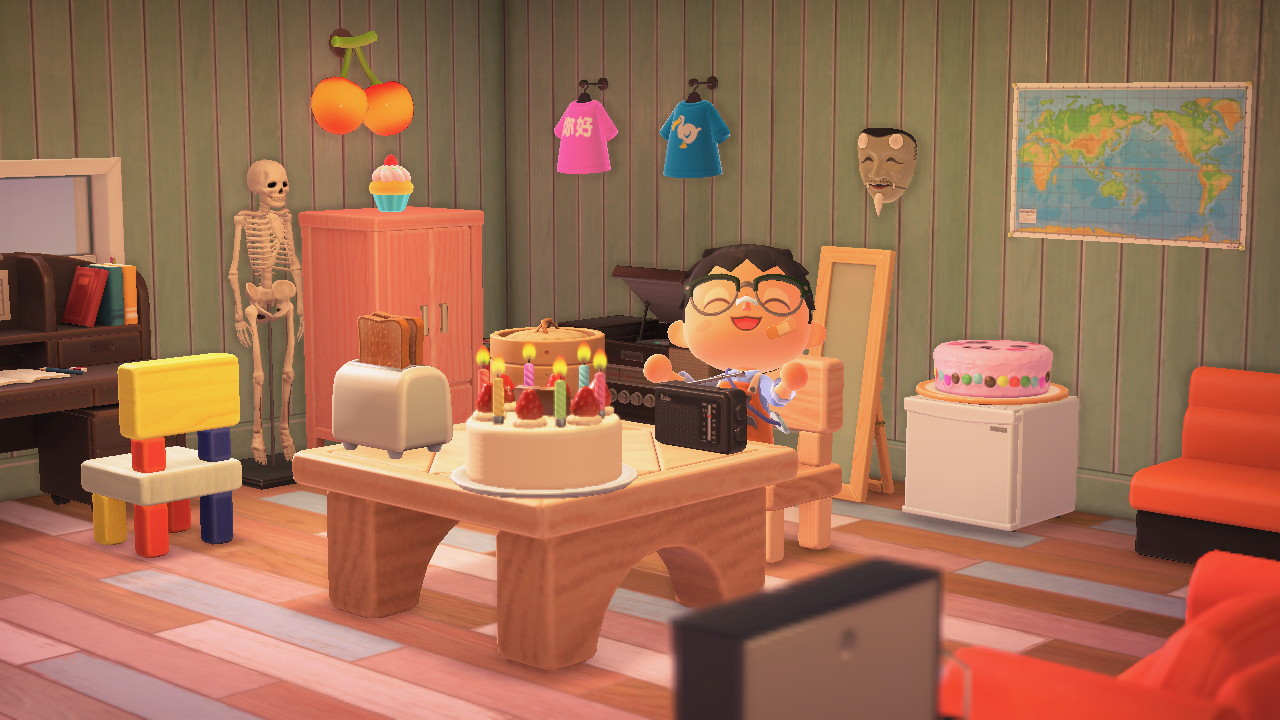 Picture credit: Bread Lee
Sylvia, who I had always known to meticulously craft her in-person aesthetic, proudly showed me her island’s panoramic views before the inside of her house. She shares her island with her sister, and their houses sit atop a terrace of symmetrical waterfalls; her black-paneled house with skull and crossbones sat in stark contrast to her sister’s cozy red and white cottage. Both Sylvia and Sonia Muzemil had a penchant for landscaping; they had arranged their animals’ houses into careful rows of three, giving each animal their own personalized benches, swing sets, and decor. But it was obvious Sonia’s main specialty was in interior design. Each room looked like something out of a fairy tale, with a pink cherry-blossom themed bathroom, a mustard-yellow kitchen, and a verdant living room lined with succulents and plants.
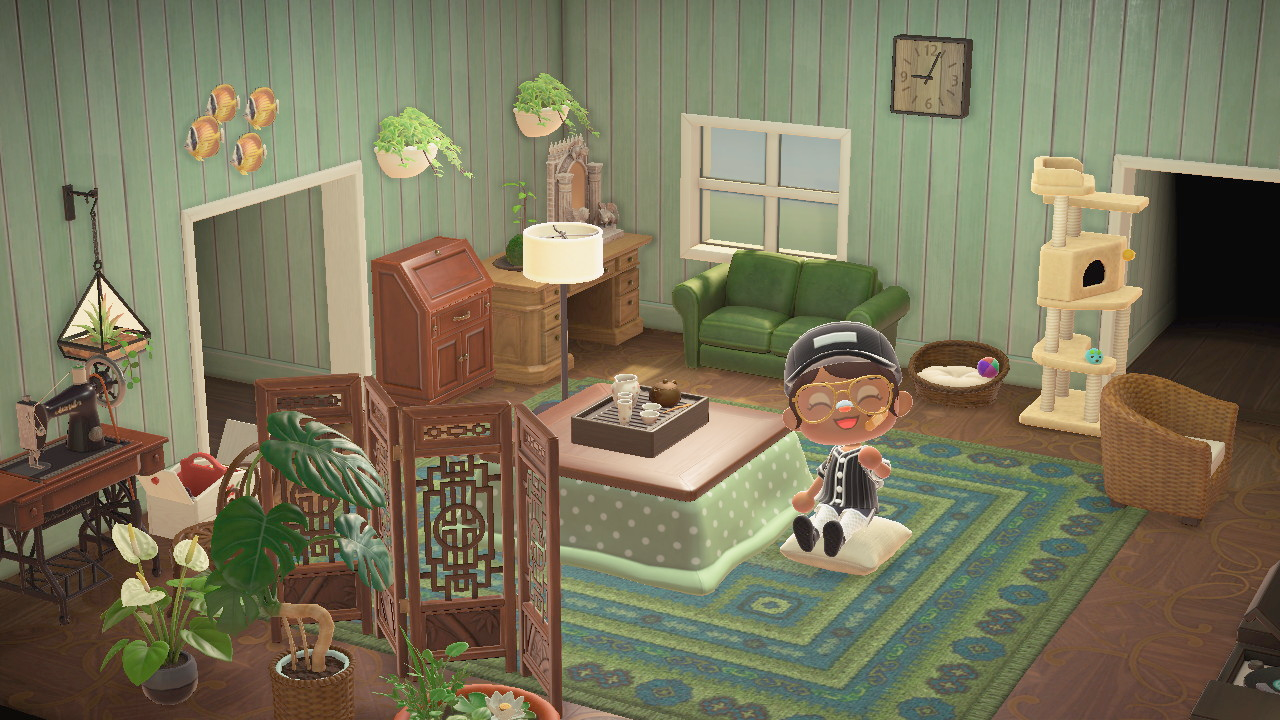 Picture credit: Sonia Muzemil
Compared to the rural landscapes and fruit trees of the original deserted island, Jiyoon Kang’s island struck me as the first that looked like a bustling island getaway. The roads were lined with cafes, campsites, playgrounds, and parks; I struggled to keep up as her character ran past street-food stands, fish markets, pools, and what looked like a dance floor with neon lights. “You should’ve seen it on my iPad – I literally drew out what I was going to make!” she told me as she weaved through the metropolitan landscape. Her house was fully upgraded and just as diverse as the outside, with a photography studio and a bathroom “just like the one in Parasite.”
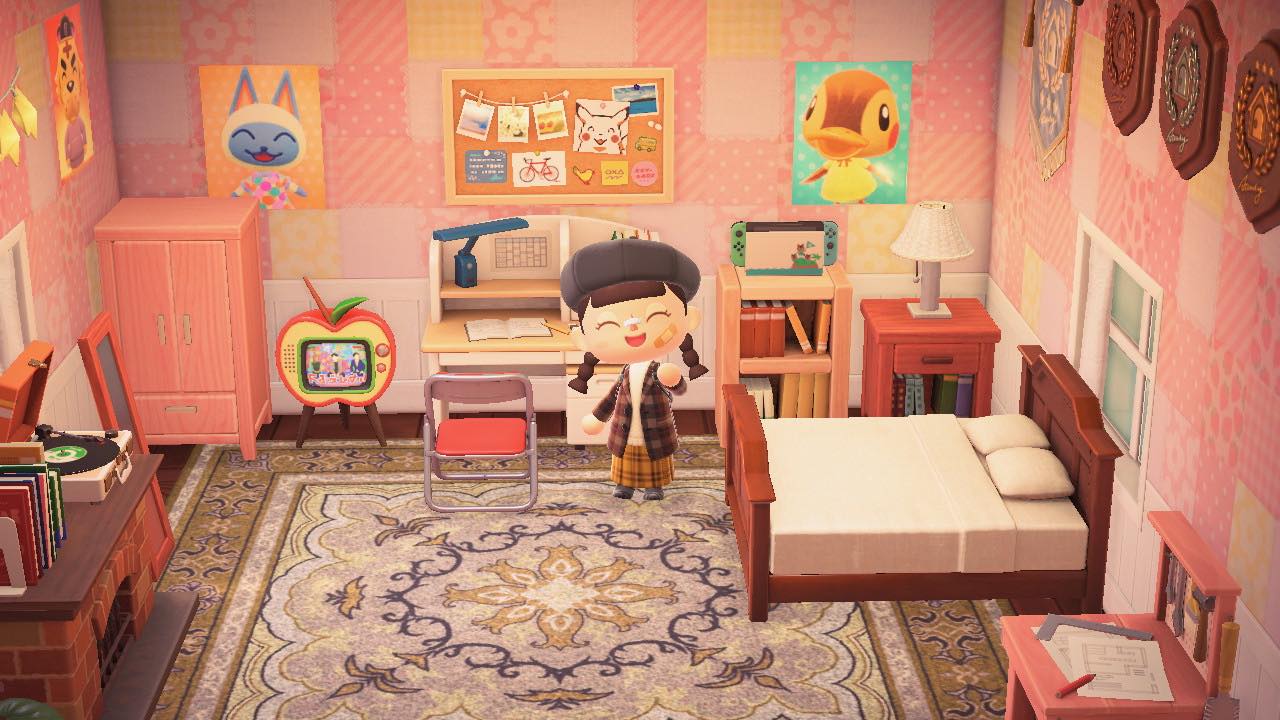 Picture credit: Sylvia Yu
There are so many details these players were proud of that I could gush about them for hours – Max Shramuk’s bizarrely funny shrine to teddy bears, Christina’s beautiful Chinese dresses, Tien VoNguyen’s dedication to carefully arranging flowers – and I was surely not the first outsider to “visit” the islands. The game lets other players visit your island in real-time, a virtual hangout strangely more intimate than the cage-like panels of a Zoom call. “It’s the only way I’ve been socializing lately,” said Jiyoon.
Sylvia adds, “It’s nice to have this unifying factor bringing so many people together. It’s opened up so many more friendships that I wouldn’t have made otherwise, even in real life.” Graduation ceremonies, romantic dates, wedding proposals, and even memorials have been given new life behind the screen of a video game.
In the time of social distancing, millions more are experiencing what Aya Kyogoku, director of the Animal Crossing franchise, originally envisioned for the game. “For me, this Animal Crossing game isn’t simply about enjoying everyday life,” she said in a 2001 interview. “The game becomes a stage for creating a town, and a world where everything is just as you want it.”
Here, in Animal Crossing, is a world where Jiyoon’s photography business is still booming; where Miriam, who had recreated her college’s sweater, can reminisce about the semester we lost; where Bread can celebrate their twenty-second birthday while watching a meteor shower with friends; and where Max can escape the claustrophobia of living with five other family members. Each person’s island reflected what they wished the world would look like, if it weren’t for the pandemic – a healthy world, a better world. “I feel like I replaced my life post-quarantine with this, and what I wanted in my life all went into here,” said Jiyoon. Animal Crossing is not an escape from life – it is a life in itself, just lived somewhere else.
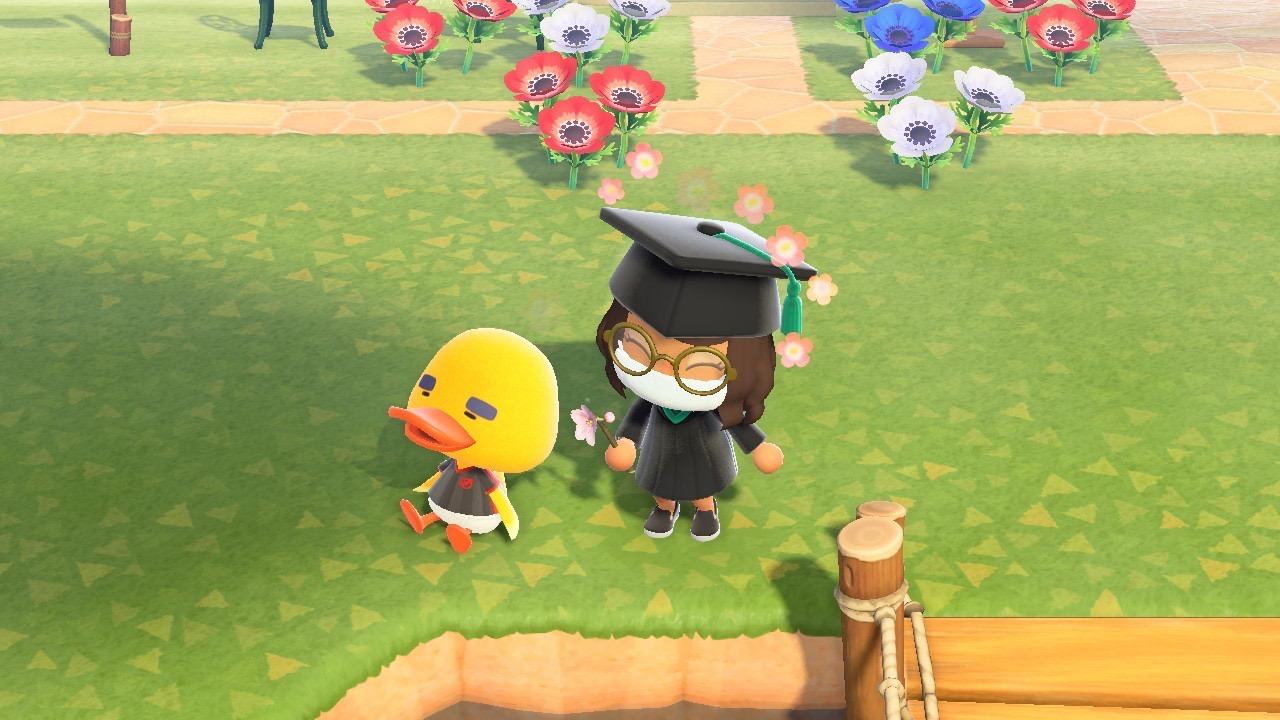 Picture credit: Jiyoon Kang
•
It has been four years since Eric Kim has returned to his village in New Leaf, the predecessor to the newest game, and the version I never understood years ago. It is woefully outdated: the graphics are pixelated, the software slower, and the game runs on the now-defunct Nintendo 3DS. But the sight of the old console sent waves of nostalgia down his spine, and a memory stirred – a stormy day. Home from school. Fourteen again, windows streaked with rain. His middle-school girlfriend was resting her head on his shoulder, nose buried in her 3DS. She held the console up to his face. “Eric, why don’t you get New Leaf? We could play together,” she teased. “Look how cute Apple is.” Eric stared curiously at the cute red hamster as his girlfriend wandered around to catch bugs.
“Yeah. I think I will,” he replied, even though he didn’t completely understand what the game was about. As thunder rattled the windows, he watched New Leaf’s sunset over a cloudless sky. “I think I will.”
In the present day: Eric set down his Switch, which has seen hours of playtime on New Horizons, to pick up the old console. “I don’t know what exactly impelled me to pick up my 3DS yesterday, but I did… I figured I’d check on my old town as well,” he explained to me.
The game opened to a cloudy sky and a field riddled with weeds. His character stepped out of his old house, hair disheveled and outfit outdated; I can’t believe I thought those headphones looked cool, he thought. It was surreal – was this dilapidated town really the same one he had spent hundreds of hours building?
Hans, a charming blue gorilla with an argyle sweater, greeted him first, walking towards Eric through a sea of overgrown weeds. “You’re the mayor of Vanilla, and yet you’ve been away for four years…” mumbled the blue gorilla forlornly. That much is obvious with one look around the village – flowers, once meticulously-arranged, were long wilted; charming garden paths and roads were overgrown with weeds; and villagers had moved out, their once-beautiful houses replaced with empty plots of land.
Every villager Eric spoke to was another pang of guilt. New residents had replaced the old ones, and they made snarky comments about how he never welcomed them to the village. The few stragglers thought he was a ghost, shocked that Eric had finally returned to the village. His mailbox was packed with unopened letters from years past, and the bulletin board packed with community events and birthdays he had never shown up to.
But he saw a red hamster wandering towards him and realized with a start – Apple had stayed. Apple the hamster, one of the first villagers Eric had ever met, was not sneering at him. She was not complaining about the weeds or disappointed at his late return. Instead, she smiled her big, peppy hamster smile, and exclaimed, “Whatever! I’ll take it! One more day with you, Eric? Totally! Let’s make it the best day EVER!” Her face was the picture of joy.
“I wanted to make it up to them,” Eric told me. “I had so much work on my docket, being in the midst of finals, but I didn’t care, all I wanted was to make it up to my old friends.”
He spent the next few hours making visits to every animal that remained in the town, giving gifts and catching up, as if one afternoon could heal the wounds from four years of neglect. The world had moved on to New Horizons, but Eric’s town - this neglected, dilapidated town - was still the town he loved, even beneath the weeds and refuse. These were his friends. They always would be. They had stayed, and they never stopped waiting for him.
After that afternoon’s session, Eric deleted the New Leaf village forever. Wiped the save data clean; he would never see the town again. “I imagined that all the villagers would move on to new towns and islands, to a player that could take better care of them,” he said. “It was a weird moment of catharsis when I deleted the island. I felt like I’d released all of the pent up guilt and set my friends free to continue their lives.
“It’s all in my head, but this digital world feels very, very real for me. Many of my friends and dozens of strangers have passed through my New Horizons island, but my New Leaf town was mine and mine alone for that afternoon, and it felt special to spend it with my friends.”
•
I play New Leaf now. The game is old and outdated, and I get quizzical looks when I mention I’m not playing New Horizons instead (my excuse is that I don’t have a Switch). But I’m hooked: I love waiting for the beetles to come out at night, getting nonsensical gifts from these animals, and sharing pictures of my village with my friends. Part of me hopes that Eric’s lost villagers, Apple, Hans, and everyone else, will somehow make their way to my town, so that I can make them happy for another day. I have left a spot by the river for their house.
I know this world is fake, and that the villagers are programmed (everyone does), but the joy this game has brought to my friends, my family, and millions of players is undoubtedly real. The game stirs emotions rarely seen in video games – nostalgia, regret, reminiscence, friendship – the very same emotions our isolated hearts crave during isolation. There is compassion in Molly the duck’s eyes as she teaches you how to craft picture frames; sparks of curiosity in Blathers the owl, when you bring him a dinosaur bone for his museum; mischief in Redd, a fox whose goal in life is to sell unsuspecting buyers counterfeit paintings. And there was forgiveness in Apple, the hamster in Eric’s old town, who was overjoyed that her best friend had finally returned. In Animal Crossing there is a bit of humanity packaged behind the pixels of a hundred colorful animals, giving us a life that is just as meaningful any “real” one.
I don’t know when the virus will end, or when we’ll be able to step out into the sunshine to see our loved ones again. No one knows when the world will stop feeling so dangerous, so hostile. But Animal Crossing has given us a moment – a fleeting, precious moment – where the world feels like a happy place. And for that, I am endlessly grateful.
•
This piece was written in the spring of 2020 for a creative nonfiction class in literary journalism, taught by Heather McPherson.
Thank you to Sylvia Yu, Eric Kim, Christina Pan, Miriam Franks, Bread Lee, Sonia Muzemil, Jiyoon Kang, Max Shramuk, and Tien VoNguyen for interviewing and contributing to this piece.
•
Photo Gallery
A showcase of islands from this piece’s wonderful interviewees!
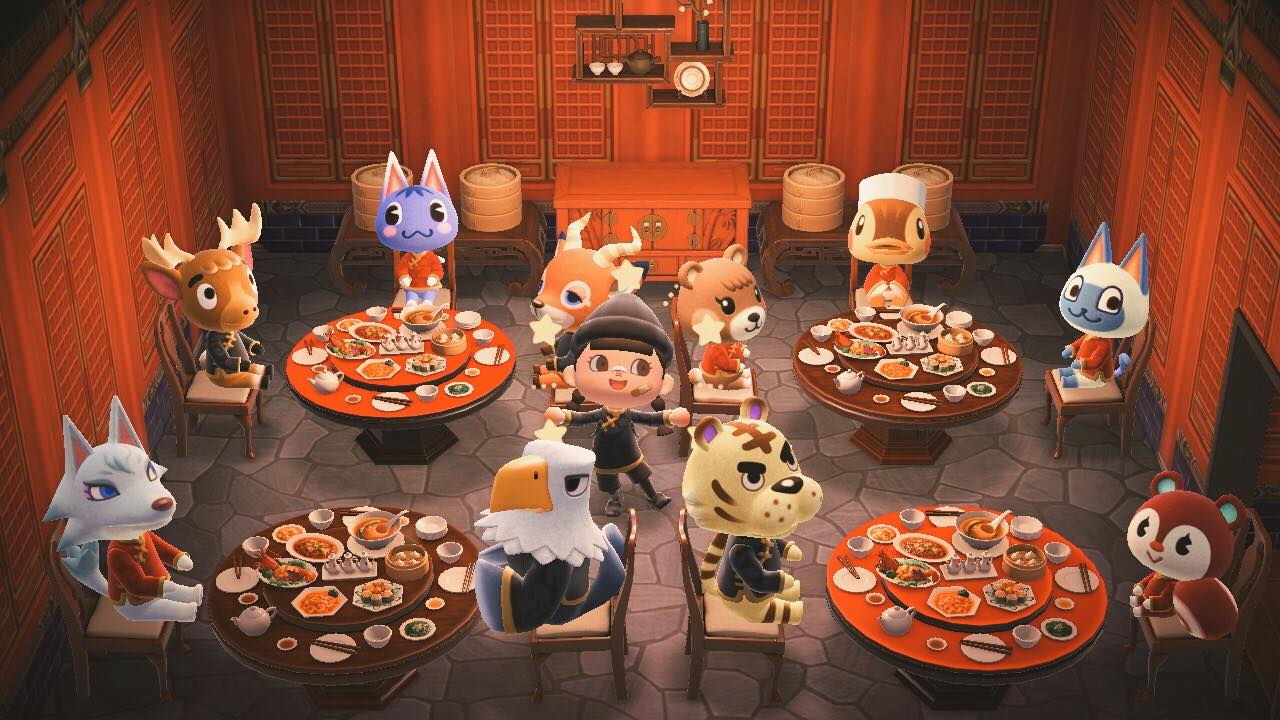 Picture credit: Sylvia Yu
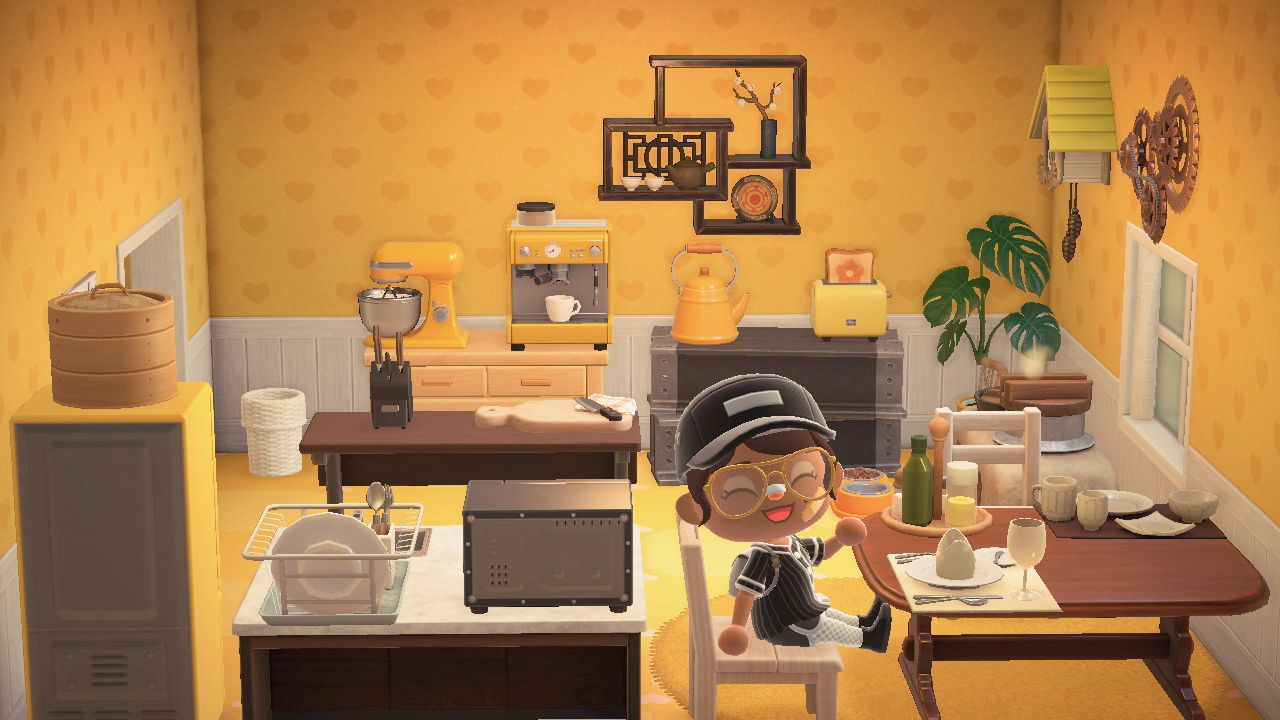 Picture credit: Sonia Muzemil
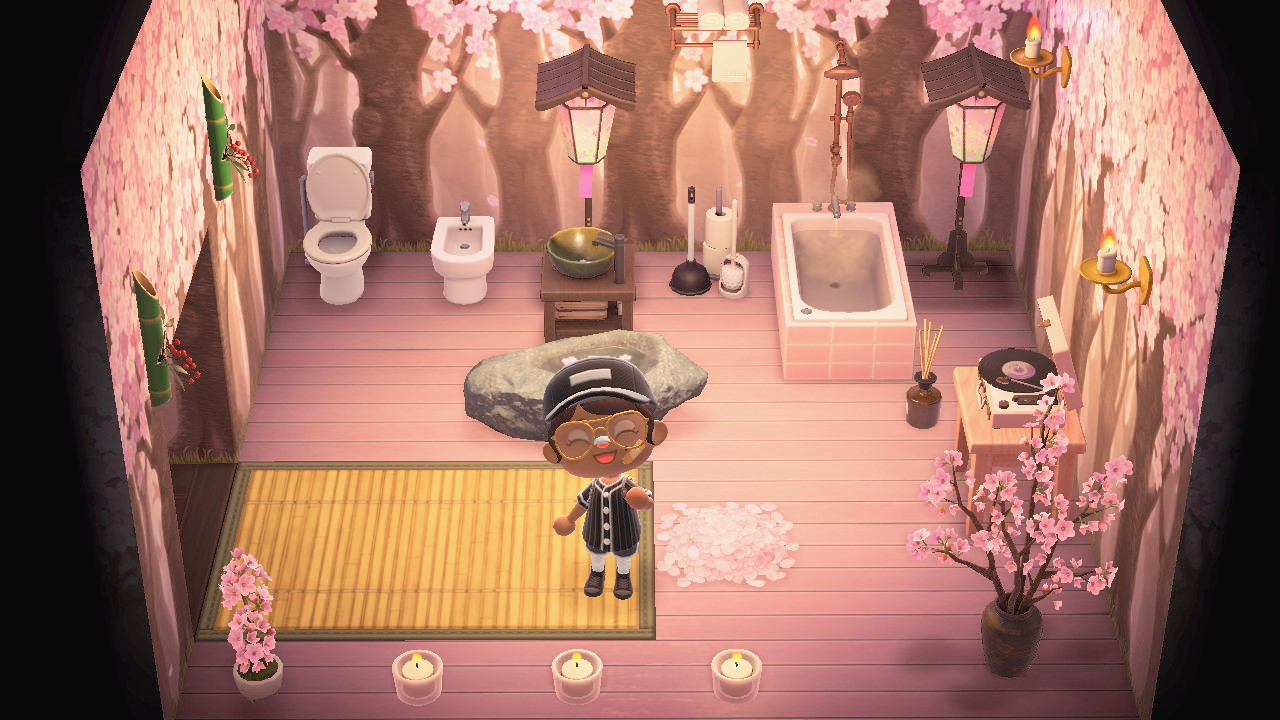 Picture credit: Sonia Muzemil
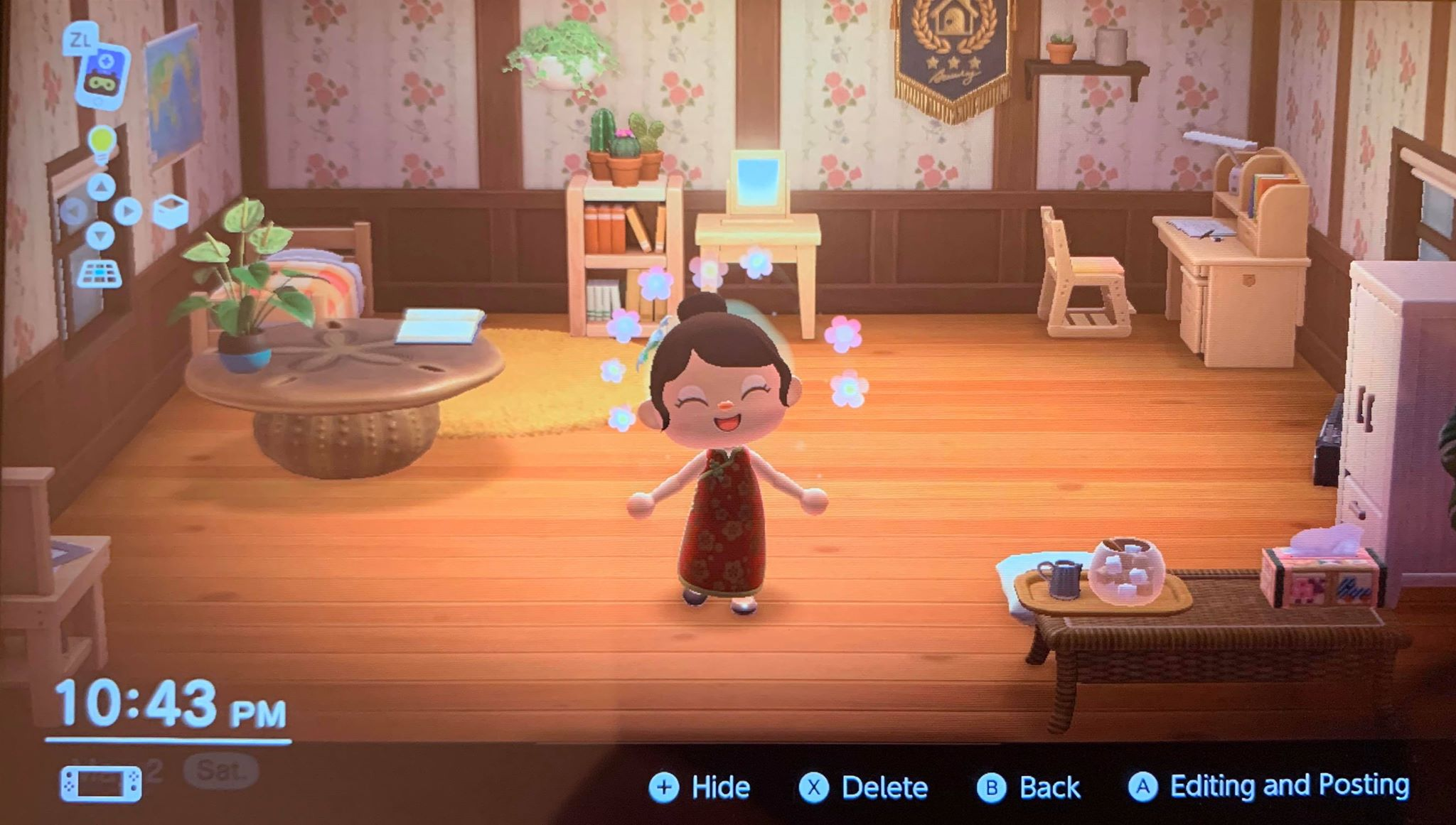 Picture credit: Christina Pan
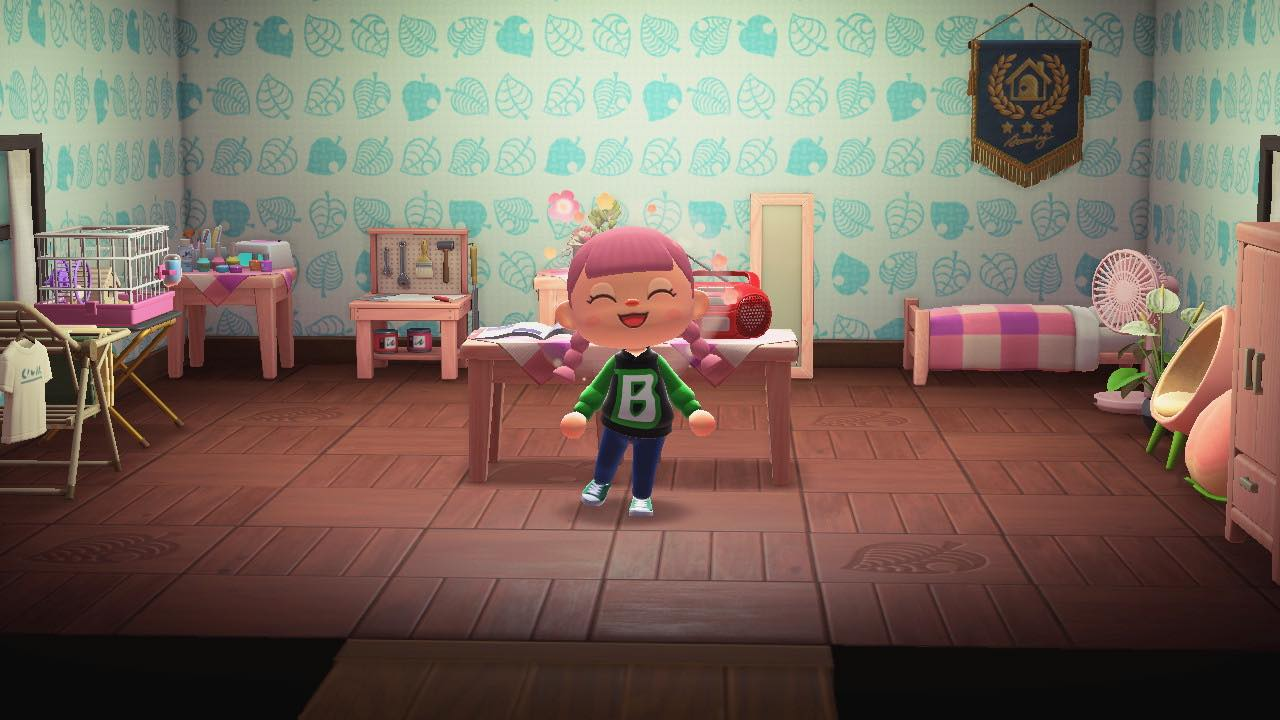 Picture credit: Miriam Franks
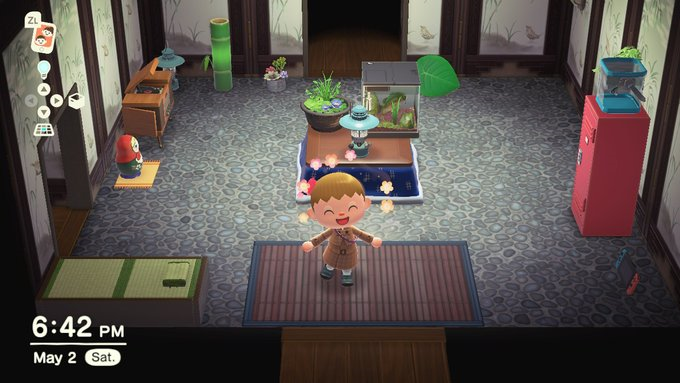 Picture credit: Max Shramuk
| previous | return | next |
|---|